Original searchable review
Our review
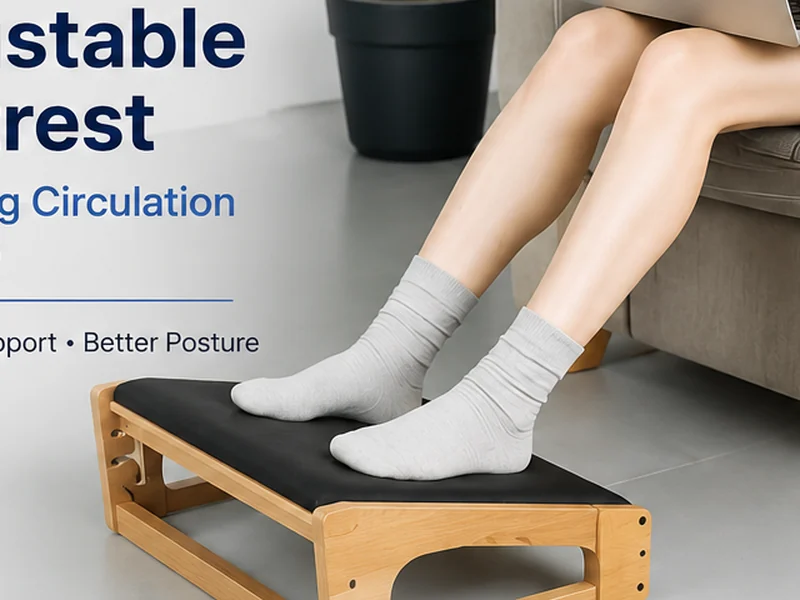
A footrest can make a workstation feel more intentional when a chair and desk do not naturally place both feet on a comfortable surface. The wooden option is appealing to buyers who want a firmer platform, a more finished appearance and less compression than a foam cushion. It may also be easier to reposition with a foot when the base has enough weight and traction.
The practical advantage is adjustability and consistency. A firm platform does not change shape during the day, so the user can decide whether the angle and height fit the workstation. It can also help shorter users avoid sitting at the front edge of the chair simply to reach the floor. U.S.A. Plans presents this as a comfort and workstation-planning tool—not as treatment for circulation, pain or any medical condition.
What to verify before buying
Check the current listing for platform dimensions, height or angle settings, weight capacity, anti-slip surfaces and how the adjustment mechanism locks. Measure the open space beneath the desk before ordering, especially if there is a crossbar, drawer or keyboard tray. Wood products can vary in finish, edge treatment and assembly quality, so review the current seller details and return policy.
U.S.A. Plans conclusion
Choose this style when stability, appearance and a firm surface matter more than softness. The right result depends on the user’s chair height, desk height and available legroom.
Affiliate, image and product-information notice
As an Amazon Associate I earn from qualifying purchases. The Amazon button and linked product image are paid affiliate links. A qualifying purchase may generate compensation for U.S.A. Plans at no additional cost to the buyer.
Image created by artificial intelligence. Actual product appearance may vary. Amazon controls the current product page, seller, price, availability, customer reviews, shipping terms and final specifications. This editorial review does not guarantee performance or suitability.